If a Mosquito Bites Someone with HIV Then Bites Me / Sharing Items — Can I Get HIV? Common Transmission Myths
Misconceptions about HIV transmission are still common. One frequent question is if a mosquito bites someone with HIV then bites me, will I get it, or can sharing items transmit HIV. In truth, mosquitoes don't spread HIV, and everyday activities like sharing items, using the same toilet, eating together, or casual contact don't transmit it, because HIV is transmitted only through limited routes. These misconceptions not only create unnecessary fear but also lead to stigma and unfair treatment of people with HIV. This article explains with accurate information why mosquitoes don't spread it, what doesn't transmit HIV, and how HIV is actually transmitted, so we can live together with understanding.
If a mosquito bites someone with HIV then bites me, will I get it
The answer is no. Mosquitoes cannot spread HIV from one person to another, even if they previously bit someone with HIV. This is a scientifically confirmed fact. The worry is understandable because mosquitoes suck blood, but the way mosquitoes work and the nature of HIV make transmission through mosquitoes practically impossible. So being in an area with mosquitoes or getting bitten does not increase HIV risk. Although mosquitoes can spread other diseases like dengue or malaria, HIV is not one of them.
What doesn't transmit HIV
There are many everyday activities people worry about unnecessarily, because they actually don't transmit HIV.
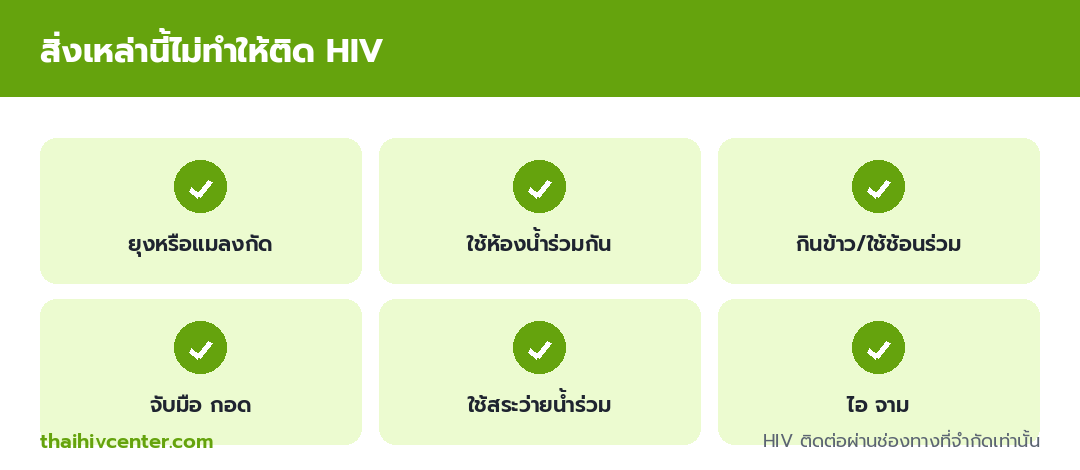
Activities that don't transmit HIV include mosquito or insect bites, sharing a toilet, eating or sharing utensils and cups, shaking hands, hugging, or casual contact, sharing a pool, and coughing or sneezing. These involve no exchange of fluids with enough virus to cause infection. HIV is not present in sweat, tears, saliva, or urine in transmissible amounts. So being close to, working with, or living with a person with HIV in daily routines is completely safe. Read more in what does not transmit HIV.
Why mosquitoes don't spread HIV
There are clear scientific reasons why mosquitoes cannot spread HIV.
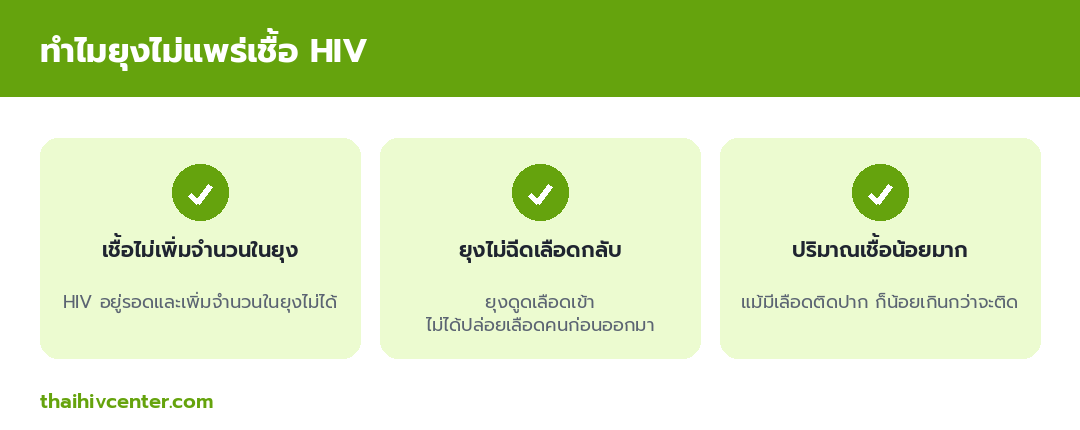
First, HIV cannot survive and multiply inside a mosquito, unlike the parasites causing malaria or dengue that have a life cycle in mosquitoes. When HIV enters a mosquito, it is broken down and not passed on. Second, mosquitoes don't inject a previous person's blood into the next person bitten. A mosquito's feeding mechanism is to suck blood in, not release it out; what it releases is saliva to prevent clotting, not the previous victim's blood. Third, even if a tiny amount of blood is on the mosquito's mouthparts, the viral amount is too small to cause infection. For these three reasons, mosquitoes are not a vector for HIV.
Are sharing items, toilets, and pools risky
Sharing everyday items does not transmit HIV. Sharing a toilet is safe, because the virus doesn't transmit through urine or feces and can't survive long on surfaces. Sharing a pool is safe, because pool water dilutes and the virus doesn't spread through water. Sharing utensils, cups, towels, or clothes doesn't transmit it either. The only general caution is personal items that may have blood, such as razors or a toothbrush with bleeding gums, which are recommended to be personal anyway by general hygiene, not specifically for HIV.
How HIV is actually transmitted
For correct understanding, the table below compares routes that can and cannot transmit.
| Can transmit | Cannot transmit |
|---|---|
| Unprotected sex | Mosquito or insect bites |
| Sharing needles | Sharing toilets/pools |
| Mother to child (without care) | Eating, sharing utensils/cups |
| Receiving infected blood | Handshakes, hugs, coughing, saliva |
HIV is transmitted through fluids with high viral levels — blood, semen, vaginal fluids, and breast milk — through specific routes only. Everyday activities are not in the transmissible group. Read more in how HIV is transmitted.
Other common misconceptions
Besides mosquitoes and shared items, there are other misconceptions to correct — such as the belief that HIV is transmitted through kissing or saliva, which is not true, because saliva doesn't transmit the virus. Read more in can kissing transmit HIV. Or the belief that looking at or being near a person with HIV transmits it, which is entirely baseless. Oral sex has very low but not zero risk, unlike casual contact — read can oral sex transmit HIV. Having accurate information reduces unnecessary fear and stigma.
Living with people with HIV normally
Once we understand that HIV doesn't transmit through casual contact, we see that living with a person with HIV in daily life is completely safe — whether working together, studying together, living in the same home, eating together, or hugging and touching normally. A person with HIV treated to undetectable also doesn't transmit HIV sexually (U=U). Reducing stigma is very important, because it helps people with HIV access treatment and live with dignity. Correct understanding is the best tool for building a society that is equal and safe for everyone.
Frequently asked questions
A mosquito bit someone with HIV then bit me — will I get it
No, mosquitoes don't spread HIV, because the virus doesn't multiply in them and they don't inject a previous person's blood into the next.
Is sharing a toilet risky
No, the virus doesn't transmit through urine or feces and doesn't survive long on surfaces.
Will eating with a person with HIV transmit it
No, eating together, sharing utensils and cups, or receiving food from a person with HIV does not transmit HIV.
Is sharing a pool risky
No, the virus doesn't spread through water and is diluted in a pool; swimming together is safe.
Summary
Mosquito bites don't transmit HIV, because the virus doesn't multiply in them and they don't inject blood back. Likewise, sharing items, toilets, pools, eating together, or casual contact don't transmit it, because HIV is transmitted only through limited routes like blood, sexual fluids, and mother to child. These misconceptions create unnecessary fear and stigma. Accurate information lets us live with people with HIV safely and equally. If you have a real sexual risk and want to consult or test, find a clinic near you.