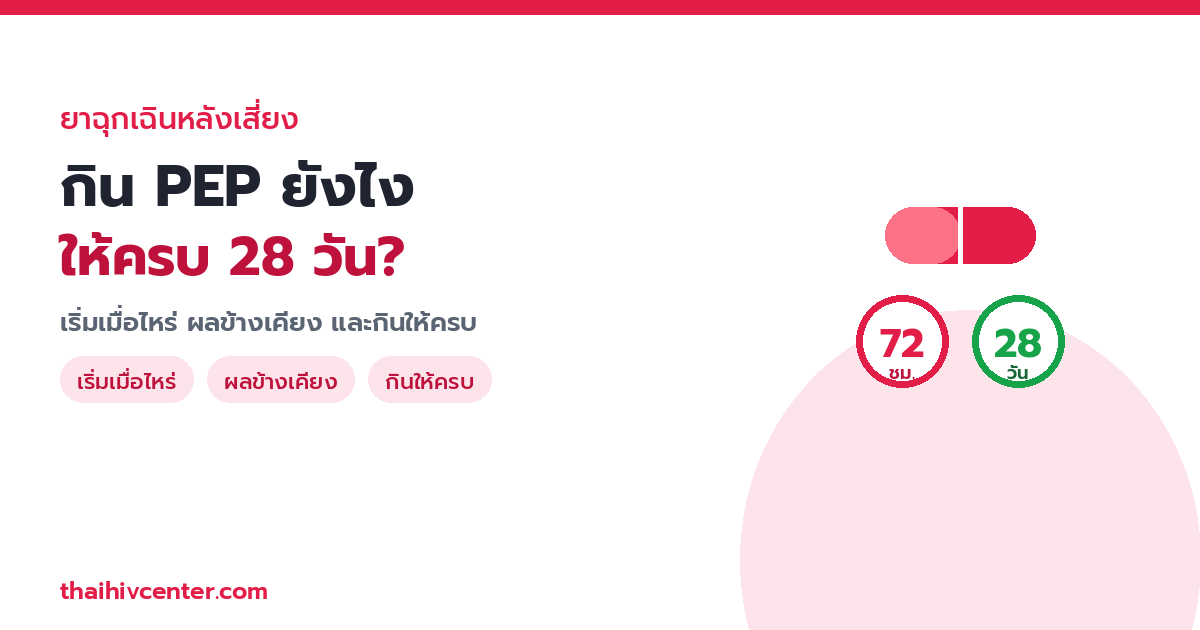
How to Take PEP for the Full 28 Days: When to Start, Side Effects, and Caring for Yourself While on It
After a risk of HIV infection — such as a broken condom, unprotected sex, or contact with possibly infected blood — PEP, emergency antiretroviral medicine, is an important option that helps prevent infection. However, PEP only works if started as soon as possible within the window and taken correctly for 28 days. Many who receive PEP ask how to take PEP for the full 28 days, when to start, when in the day, its side effects, and what to do if they miss a dose. These questions matter, because taking it incompletely or incorrectly can reduce its protective effectiveness. This article is a guide explaining in detail from starting the medicine, taking it correctly, handling side effects, managing missed doses, to monitoring and what to do after completing it, so you can use PEP effectively and safely — always following your doctor's advice.
What is PEP — a quick recap
PEP stands for Post-Exposure Prophylaxis — taking antiretroviral medicine after a risk of HIV, to stop any virus that entered from establishing and multiplying into a permanent infection. PEP is emergency medicine, not routine prevention, so it differs from PrEP taken in advance continuously. The key principle of PEP is starting as soon as possible and within 72 hours of the risk, then taking it daily for 28 days. PEP is usually used in specific unplanned situations, such as a broken or slipped condom, unprotected sex with someone of unknown status, sexual assault, or risky blood contact. Understanding that PEP is a correction after the event that requires speed helps you realize the importance of time. Read a comparison in how PrEP and PEP differ.
How to take PEP
Taking PEP means taking antiretroviral medicine as the doctor prescribes, continuously every day for 28 days. Generally, PEP is a regimen the doctor sets, which may be a single pill or several per day depending on the regimen. What matters most is completing the full course and not missing doses, because the medicine must maintain a level in the body continuously to suppress the virus effectively. PEP isn't a one-time dose but continuous over 28 days, even if you feel well or have no symptoms. Understanding that PEP must be completed for the full period helps you take it consistently. A doctor sets the appropriate regimen and gives specific advice for each person, so following the doctor's advice strictly is most important in using PEP.
Start PEP as soon as possible
Time is the most important factor of PEP. Starting as soon as possible increases the chance the medicine works.
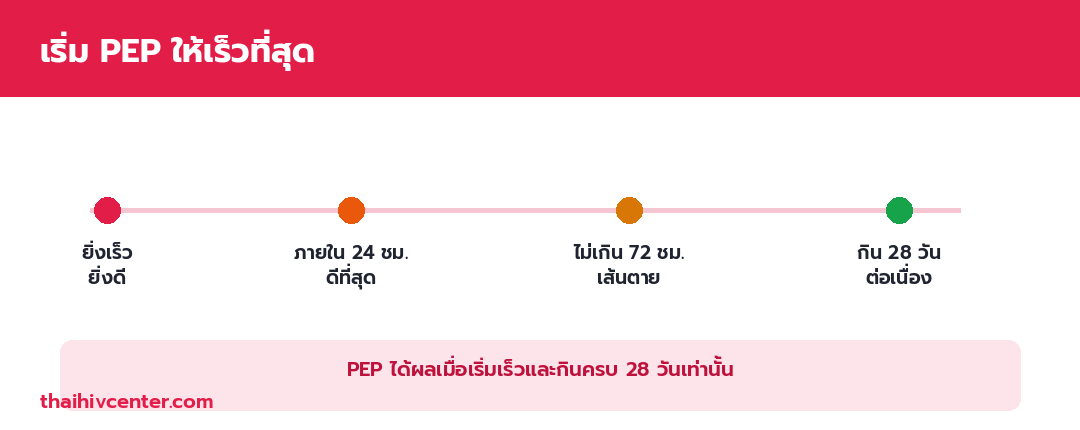
PEP must start within 72 hours of the risk, and the sooner you start, the higher the chance the medicine works. Starting within 24 hours is best. The reason is that after the virus enters, there is a window when it is still at the contact site and hasn't fully spread into the bloodstream. Starting in this window helps stop the virus before it establishes permanently. But if more than 72 hours pass, the virus has usually spread, so PEP can no longer prevent infection. For this reason, if you have a risk, don't wait for symptoms or delay, but promptly go to a clinic or hospital. A hospital emergency room is accessible any time, including at night or on holidays. To estimate the timing, use our PEP time calculator.
When in the day to take it
Once you have PEP, take it at the same time each day to help keep the level steady and make it easier to remember. Choosing a time that suits your routine is important. Some may take it in the morning with their routine; some before bed. What matters is not a specific time but taking it consistently at about the same time each day over the 28 days. Tying dosing to a regular routine, like meals or brushing teeth, helps you not forget. Setting a phone reminder or using an app is very helpful for completing the course, since PEP must be taken continuously for as long as 28 days. Having a good reminder system is an important aid. Taking the medicine on time consistently helps maintain the protective effectiveness.
With or without food
Generally, PEP can be taken before or after food, depending on the regimen and a doctor's advice. However, because a common PEP side effect is nausea, taking it with food may help reduce this in some people. If you feel stomach discomfort after taking it, trying it with food may help. What matters is taking it consistently in a way you find convenient and can sustain over the 28 days. If you have questions about taking it with food or other medicines, consult a doctor or pharmacist, because some regimens may have specific advice about taking with food. Following this advice helps you take it correctly and get maximum effectiveness, plus reduces the chance of bothersome side effects.
Side effects and how to handle them
PEP may have side effects early on, but most are mild and manageable.
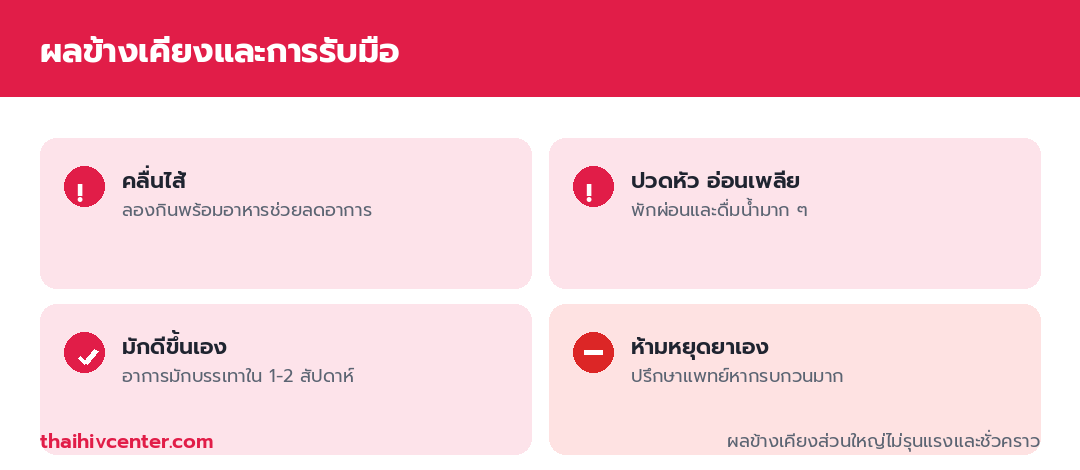
| Possible side effect | How to handle |
|---|---|
| Nausea | Try taking the medicine with food |
| Headache, dizziness | Rest enough, drink plenty of water |
| Fatigue | Rest and care for general health |
| Stomach pain, diarrhea | Consult a doctor if very bothersome |
Common PEP side effects include nausea, headache, dizziness, fatigue, and stomach pain, which are usually mild and improve as the body adjusts within a few days to two weeks. Taking it with food may reduce nausea. Resting enough and drinking plenty of water helps ease headache and fatigue. Importantly, even with side effects, don't stop on your own, because stopping midway reduces protective effectiveness. If side effects are very bothersome or don't improve, consult a doctor about the approach, which may include adjusting the regimen in some cases. Understanding that most side effects are only temporary and not a reason to quit helps you get through the adjustment period and complete the course.
What to do if you miss a dose
Missing a dose can happen during the 28 days of PEP. If you miss a dose, generally take it as soon as you remember. However, if it's already close to the next dose, don't take two doses together to make up, but take the next dose as usual. Missing doses for long or missing several may reduce PEP's effectiveness, so if you miss for long or miss several, consult a doctor promptly for advice on what to do next. What you shouldn't do is decide to adjust the dose on your own without consulting, because you should follow correct advice, since completing and consistency matter for PEP's effectiveness. A good reminder system and planning ahead reduce the chance of missing. If you have questions about a missed dose and its impact, asking a doctor or clinic is always the best option.
Why complete the full 28 days
PEP's 28-day duration is not arbitrary but the time needed for the medicine to effectively suppress any virus that entered. Taking it incompletely or stopping midway may let suppressed virus multiply again and lead to infection. Even if you feel well or have no symptoms while taking it, that doesn't mean you can stop, because protection depends on completing the full course. Completing the 28 days is therefore a key condition for PEP to work. Understanding this reason helps motivate you to complete the course, even with some side effects or inconvenience. Viewing completing the course as an investment in protecting yourself long term helps you follow through. If you have obstacles to completing, such as side effects or other issues, consult a doctor to find a solution, not stop on your own.
Don't stop the medicine midway on your own
One of the most important things in taking PEP is not stopping midway on your own before completing 28 days. Even for various reasons — feeling well, having side effects, or thinking it's no longer necessary — stopping midway greatly reduces PEP's effectiveness and may waste your previous effort. If you face a problem that makes you want to stop, such as bothersome side effects, consult a doctor, not stop on your own. A doctor may have ways to manage side effects, or in some cases consider adjusting the regimen. Communicating honestly with your doctor about problems helps you get appropriate care and complete the course. Understanding that completing is necessary for protection helps you endure difficult periods and not let protection fail from stopping early.
Monitoring during and after PEP
Taking PEP comes with important monitoring. When starting PEP, a doctor usually tests HIV first to confirm you aren't infected, because PEP is only for those who are HIV-negative. During and after taking it, a doctor schedules follow-up to see results and retest HIV at the appropriate time, because testing involves the window period. Testing on schedule is important to confirm your status clearly. Besides HIV testing, there may be other health tests to monitor side effects and medicine safety. Attending follow-up appointments consistently is an important part of using PEP correctly and shouldn't be overlooked, because it ensures protection works and overall health is fine. If you have abnormal symptoms while taking it, tell your doctor for appropriate care.
PEP with other medicines and precautions
Although PEP is safe under medical supervision, there are some precautions. Some medicines may interact with the antiretrovirals used in PEP, so inform your doctor about all regular medicines, supplements, and herbs you take, so the doctor can assess whether there are interactions to watch. Also, those with certain health conditions, such as kidney issues, may need special care. Telling your doctor your health history helps choose an appropriate, safe regimen. While taking PEP, if you have severe abnormal symptoms or suspect they're from the medicine, consult a doctor immediately. Following advice and monitoring help manage these precautions. Disclosing your health information fully to the doctor is important for medicine safety and helps PEP go smoothly over the 28 days.
What to do after completing PEP
After completing 28 days of PEP, care isn't over. A doctor schedules HIV testing to follow up at the appropriate time, because you must wait past the window period to confirm your status clearly. Follow-up testing after PEP is therefore important. If the result is negative as scheduled, that's good news. Also, consider future prevention. If you have ongoing HIV risk, repeatedly using PEP isn't the best solution, because PEP is designed for occasional emergencies. In cases of ongoing risk, a doctor may recommend considering switching to PrEP, advance prevention more suitable for people with regular risk. Talking to a doctor about a long-term prevention plan helps you care for yourself appropriately. Read more about taking PrEP correctly.
PEP is not routine prevention
An important thing to understand is that PEP is emergency medicine for specific occasional risks, not routine prevention replacing other protection. If you find yourself needing PEP frequently, that may signal ongoing risk that should be prevented in a more suitable way. In this case, considering PrEP, taking medicine in advance continuously, may be more suitable and convenient long term. Using PEP repeatedly is not only inconvenient but also means facing risk and worry repeatedly. Switching to continuous prevention reduces these. Also, whether using PEP or PrEP, using condoms too is still beneficial for preventing other STIs and pregnancy. Viewing prevention as a comprehensive system helps care for sexual health thoroughly.
Can there still be risk while on PEP
While taking PEP, avoid additional risks and use protection, such as condoms, if you have sex, because the PEP you're taking is to manage a risk that already happened, not to fully prevent new risks immediately. A new risk while on PEP may complicate the situation, and you should consult a doctor. Also, avoiding additional risks makes monitoring and interpretation clearer. During this time, use protection consistently. Understanding that PEP you're taking isn't a license for more risk helps you care for yourself appropriately. If a new risk occurs or you have doubts, consulting your care doctor is what you should do, to get advice that matches the situation and maintain the protective effectiveness.
Frequently asked questions
How long do I take PEP
Continuously every day for 28 days; even feeling well, complete it, because protection depends on completing the full course.
Is missing one PEP dose dangerous
Take it as soon as you remember, but if close to the next dose don't take two together; if you miss for long or several doses, consult a doctor.
Does PEP have severe side effects
Most side effects are mild, such as nausea, headache, fatigue, and usually improve in 1-2 weeks; don't stop on your own despite symptoms.
Can I stop PEP midway if I feel well
No, stopping midway greatly reduces protective effectiveness; complete the 28 days, and if you have problems consult a doctor.
Can I use PEP often
PEP is designed for occasional emergencies; if you need it often, it means ongoing risk, and you should consider switching to PrEP.
Can I have sex while on PEP
Use protection like condoms and avoid additional risks, because the PEP you're taking is to manage the original risk.
Summary
PEP is an emergency antiretroviral that helps prevent HIV after a risk, but only works if started within 72 hours and taken continuously for 28 days. Taking it at the same time each day and setting reminders helps you complete it. Most side effects are mild and manageable, such as taking it with food to reduce nausea. Most importantly, don't stop midway on your own; if you have problems, consult a doctor instead. Monitoring during and after helps confirm results, and if you have ongoing risk, consider PrEP instead of repeated PEP. If you recently had a risk, don't delay — find a clinic near you to be assessed and get PEP in time.