How Long After a Risk Can You Test for HIV? A Guide for the Anxious
After a possible exposure, whether unprotected sex or another worrying event, the first question that races through your mind is usually: "How many days until I can test?" The anxiety of waiting can be hard to bear. This article gives you a clear timeline and explains what to do while you wait, so your mind can rest a little easier.
Why testing immediately after a risk shows nothing
After the virus enters the body, it takes some time before there is enough virus or antibodies for a test to detect. This period is called the "window period." Testing too early may give a negative result even when HIV is present. That's why waiting for the right moment matters for accuracy.
When to test, by test type
Different tests detect HIV at different times. This table shows the picture.
| Test type | Reliable from | Notes |
|---|---|---|
| NAT (viral genetic material) | ~10–33 days | Earliest detection, for high-risk exposure |
| 4th-generation Antigen/Antibody | ~18–45 days | Common in clinics, highly accurate |
| Antibody / self-test kit | ~23–90 days | Retest at 90 days to confirm |
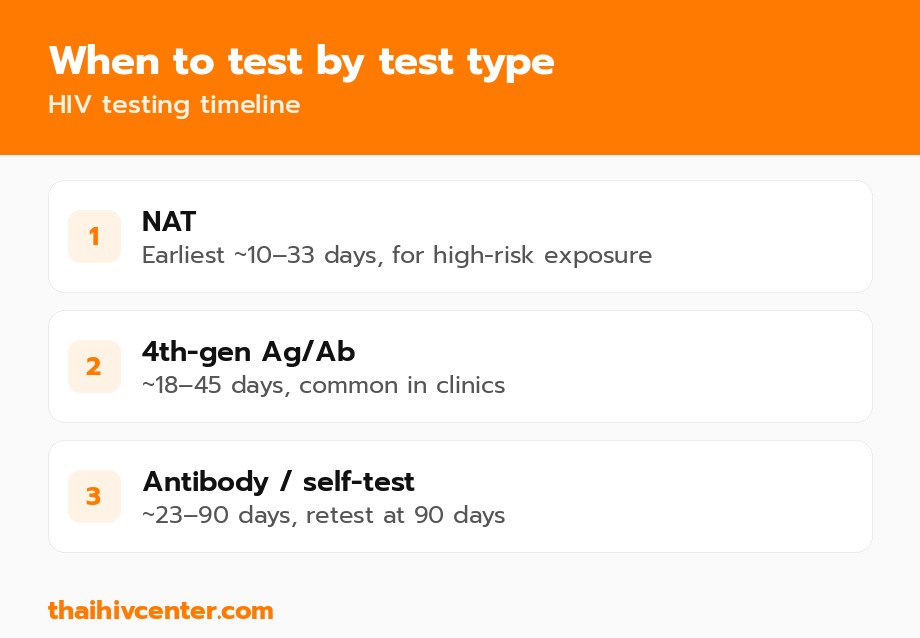
A safe approach for most people is to test first at around 2–4 weeks, then confirm again at 3 months. A negative result at 3 months is considered reliable.
What to do while you wait
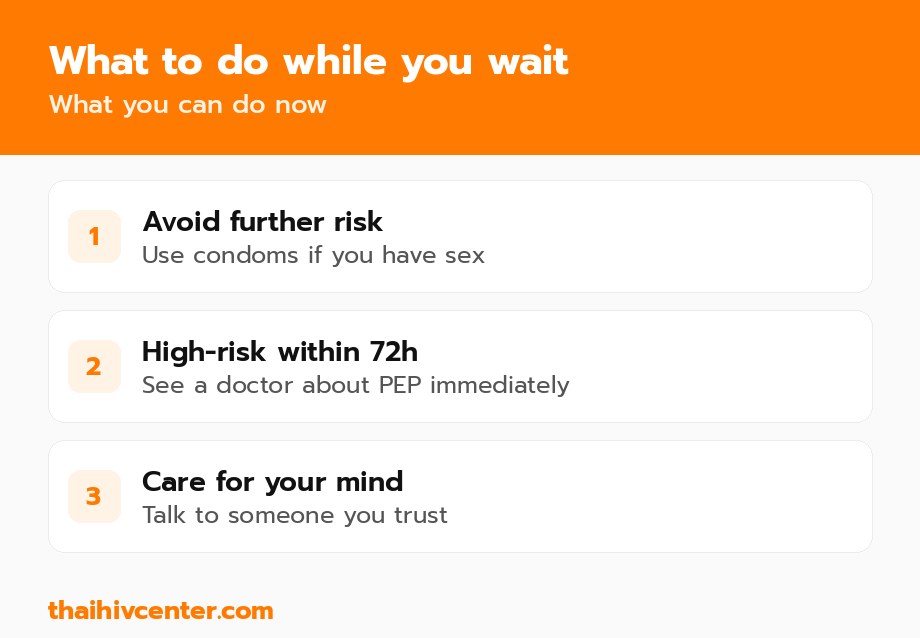
While waiting for the right time to test, avoid further risky behavior, use condoms if you have sex, and if the exposure was high-risk and happened within the last 72 hours, see a doctor immediately about PEP (emergency post-exposure medication), which can greatly reduce the chance of infection if started in time.
Caring for your mind while waiting
Anxiety is natural, but don't let it take over. Talk to someone you trust, find activities that help you relax, and remember that HIV today is a manageable, treatable condition. Whatever the result, you always have options to take care of yourself.
Frequently asked questions
I tested negative at 2 weeks, am I in the clear?
Not 100%. Confirm again at 3 months for certainty.
What is PEP and how is it different from testing?
PEP is medicine taken within 72 hours of exposure to prevent infection; testing checks whether infection has already happened.
Are self-test kits accurate?
Yes, if used correctly and within the right window. If positive, confirm at a healthcare facility.
Conclusion
Knowing the right timeline helps you test when the result is accurate and greatly reduces anxiety while you wait. If you were just exposed and worried, don't hesitate to see a doctor, especially about PEP with its 72-hour window.
For in-depth information on the window period and each test type, see Window Period in the Testing section
References
- U.S. Centers for Disease Control and Prevention (CDC) — HIV Testing Window Periods
- World Health Organization (WHO) — HIV Testing Services
- Department of Disease Control, Thailand (DDC)
This article is for educational purposes and is not a medical diagnosis. Please consult a healthcare provider for personal advice.