
Where to Get PEP and What to Do Right After a Risk
PEP is emergency HIV prevention that must start within 72 hours of exposure. This guide covers where to get it, what to do right now, what to bring, and the cost.
PEP must start fast, every hour counts
PEP, or post-exposure prophylaxis, is emergency HIV prevention for someone who has just had a risk such as a broken condom, unprotected risky sex, or contact with blood that may carry the virus.
The key point is that it must start within 72 hours of exposure, and the sooner the better. So if you have just had a risk, do not wait — find a service right away.
What to do right now within 72 hours
If you have just had a risk, follow these steps.
- Get to a health facility as fast as possible within 72 hours — sooner is better.
- Call ahead to confirm the site has PEP and to save time.
- Describe what happened honestly so you get the right care. There is no need to feel ashamed; staff are there to help without judgement.
If more than 72 hours have passed, PEP may not work, but you should still see a doctor about testing and future prevention.
Where to get PEP
PEP is available from several places.
| Service | Note |
|---|---|
| Hospital emergency departments public and private | Open 24 hours |
| Specialist sexual-health clinics | Many can provide PEP |
| Community organisations | Some refer or provide PEP |
Find and book a clinic near you at find a clinic, and for urgent out-of-hours needs, a hospital emergency department is always an accessible option.
What to bring
To make your visit smooth, bring
- Your ID card or passport to verify identity.
- Details of the event — when and how the risk happened, so the doctor can assess correctly.
- Health information such as any conditions or medicines you take, if any.
You do not need to bring any test results, because the site will test you for HIV before starting the medicine.
Cost and coverage
The cost of PEP varies by site and coverage.
- In some cases PEP is covered — especially occupational exposure or assault.
- Some community sites have programmes that reduce the cost.
- Ask about cost and coverage details directly at the site.
Do not let cost make you hesitate, because starting PEP in time matters more.
What to expect when you arrive
When you arrive, the process is usually as follows.
- HIV test first to confirm you are not already infected before starting the medicine.
- Risk assessment the doctor considers whether PEP suits your case.
- Start medicine and arrange follow-up if appropriate, you receive medicine to take for 28 days, with follow-up tests.
Read more about PEP medicine and how it is used at what PEP is.
What to do after PEP
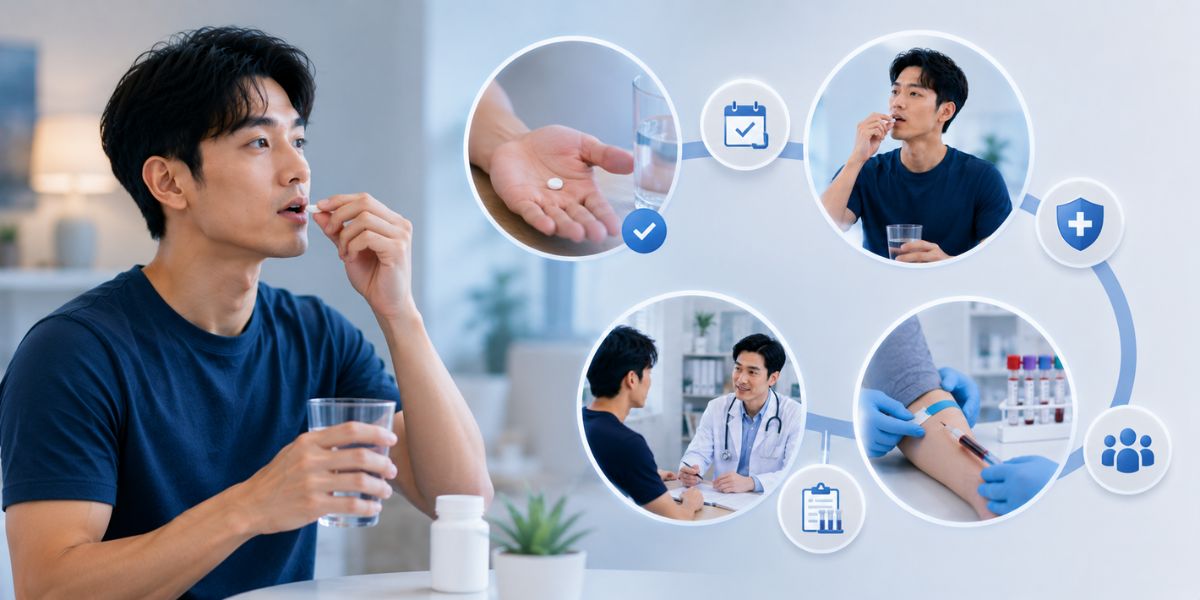
After starting PEP, the important things are
- Finish the full 28 days on time for maximum effectiveness.
- Attend follow-up as the doctor arranges, including repeat HIV testing.
- If you still have ongoing risk discuss PrEP with a doctor, which is long-term prevention before exposure.
Using PEP often is a sign you may benefit more from PrEP.
References
Based on guidance from international and national health authorities.