
PEP versus PrEP: what is the difference?
How do PEP and PrEP differ? Learn the difference between the two HIV prevention medicines — their timing, how they are used, what they share, and which to choose.
How PEP and PrEP differ

PrEP and PEP are two ways of preventing HIV with antiretroviral medicine that many people confuse, because the names are similar and they use the same class of drugs. But there is an important difference.
The main difference is timing
- PrEP is used before a risk, for people with an ongoing risk
- PEP is used after a risk, as emergency prevention
Why understanding the difference matters
Knowing when to use which helps you choose the right protection at the right moment, which matters a great deal because PEP has a limited time window. See the full prevention overview at HIV prevention: all your options.
PrEP in brief
PrEP stands for pre-exposure prophylaxis.
In brief
PrEP is taking or injecting antiretroviral medicine before a risk, to prevent getting HIV. It suits people with an ongoing risk, such as those with a partner who has HIV or who often have sex without protection.
The forms of PrEP
It comes as a daily pill, on-demand dosing, and long-acting injections, so you can choose by lifestyle. Read all the detail at what is PrEP.
The strength of PrEP
The strength of PrEP is that it can be planned in advance, so users feel confident and in control of their own protection. It suits people who know they have a regular risk.
PEP in brief
PEP stands for post-exposure prophylaxis.
In brief
PEP is emergency antiretroviral medicine taken after a possible exposure to HIV, such as a broken condom or condomless sex, to stop the virus from taking hold.
The critical time window
PEP must start within 72 hours of exposure and is taken for 28 days, and the sooner the better. Read all the detail at what is PEP.
The strength of PEP
The strength of PEP is that it is an emergency option for the unexpected. Even without planning ahead, there is still a chance to prevent infection if you act quickly within the time window.
PrEP and PEP side by side
To see it clearly, here are the main differences between PrEP and PEP.
PrEP
- Timing — used before a risk
- Suits — people with an ongoing risk
- How — a daily pill, on-demand, or an injection
- Duration — used continuously while the risk remains
PEP
- Timing — used after a risk
- Suits — a recent emergency
- How — a daily course of pills
- Duration — 28 days then stop, and it must start within 72 hours
An easy way to remember
PrEP is protection planned in advance, while PEP is emergency protection after something has happened.
They can complement each other
PrEP and PEP are not in competition but complement each other within prevention. PrEP handles anticipated risk, while PEP catches what falls outside the plan, so each has its place.
What PrEP and PEP have in common
Although they differ in timing, PrEP and PEP share some important things.
What is the same
- they use the same class of antiretrovirals to prevent HIV
- they are for people without HIV — both require an HIV test that is negative before starting
- they only protect against HIV, not other STIs or pregnancy
Both need medical oversight
Both PrEP and PEP should be used with guidance from a provider who can assess your risk, choose a regimen, and follow up appropriately.
When to use PrEP
Choose PrEP when you want protection in advance for a risk you can anticipate.
It suits these situations
- an ongoing or regular risk of getting HIV
- a partner with HIV, especially one who is still detectable
- wanting peace of mind in planning your sex life
It can be planned ahead
Because PrEP is used before a risk, it fits planning and talking to a provider in advance. See who PrEP suits at who should take PrEP.
When to use PEP
Choose PEP when something has just happened that may be an exposure and you were not already using prevention.
It suits these situations
- an unexpected broken condom or condomless sex
- sexual assault
- accidental contact with blood or sharing a needle
You must act quickly
Because PEP has a 72-hour window, you must go for care right away when something happens — do not wait. See where to get PEP at where to get PEP.
From PEP to PrEP
PEP and PrEP are not separate worlds — many people start with PEP and move to PrEP.
When to switch
If you used PEP for an emergency but find you still have an ongoing risk afterwards, moving to PrEP once you finish PEP is a better option than using PEP again and again.
A smooth transition
A provider can help plan the move from PEP to PrEP without a gap, so your protection is continuous. If you use PEP often, that is a sign PrEP may suit you better.
Plan for continuity
Many services treat a PEP visit as a chance to talk about long-term prevention. Planning for continuity from the PEP stage means you do not have to start over when you are ready for PrEP.
If you are already on PrEP
Another common question is whether you need PEP if you are already on PrEP and have a risk.
If you take PrEP consistently
If you take PrEP correctly and consistently, you are generally already protected, so extra PEP is usually not needed.
If you missed doses or are unsure
But if you have missed several doses or are not sure your drug level is high enough, talk to a provider quickly, because PEP may need to be considered. Speaking with an expert helps you decide correctly.
Consistency is the key
Whichever method you choose, consistency is what makes protection work. Taking PrEP on schedule reduces the need for PEP and brings greater peace of mind.
Neither protects against other STIs
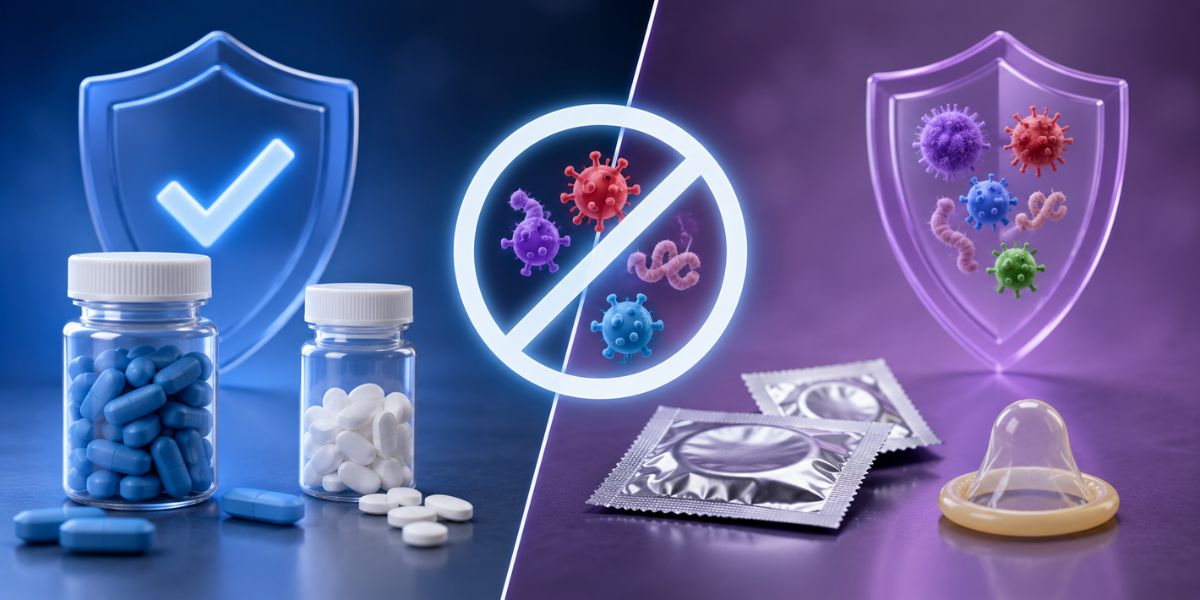
An important thing both PrEP and PEP share is that they do not protect against other STIs.
HIV only
Both protect against HIV only, not syphilis, gonorrhoea, herpes, or pregnancy.
So use condoms as well
Using condoms together with PrEP, or after PEP, gives more complete protection, and regular sexual-health check-ups matter just as much.
In summary
PrEP and PEP both prevent HIV with antiretroviral medicine, but they differ in timing: PrEP is used before a risk for people with an ongoing risk, while PEP is used after a risk as emergency prevention within 72 hours.
Both are for people without HIV, require an HIV test first, and protect against HIV only, so use condoms as well. If you use PEP often, moving to PrEP is usually a better fit.
If you are not sure which suits you, or you want to start PrEP or PEP, find and book a clinic at Love2Test.
References
Based on guidance from international and national health authorities.