What It's Like to Take PrEP: Experiences and What to Know First
Many people thinking about starting PrEP worry: "Will it make me feel bad?" This article tells you honestly how the body usually responds to PrEP, especially in the first few weeks, the common symptoms, how to handle them, and the warning signs to see a doctor, so you can start with peace of mind.
How the body usually responds at first
Most people take PrEP with no problems, but some may have mild symptoms in the first 1–2 weeks, often called "start-up syndrome," such as nausea, headache, or mild stomach upset. These usually fade on their own as the body gets used to the medicine.
Common symptoms and how to handle them
The table below summarizes start-up symptoms and simple ways to manage them.
| Symptom | How common | How to handle |
|---|---|---|
| Nausea / stomach upset | Somewhat common early on | Take with food; usually improves in 1–2 weeks |
| Headache | Somewhat common | Rest well, drink plenty of water |
| Mild fatigue | Less common | Usually resolves as the body adjusts |
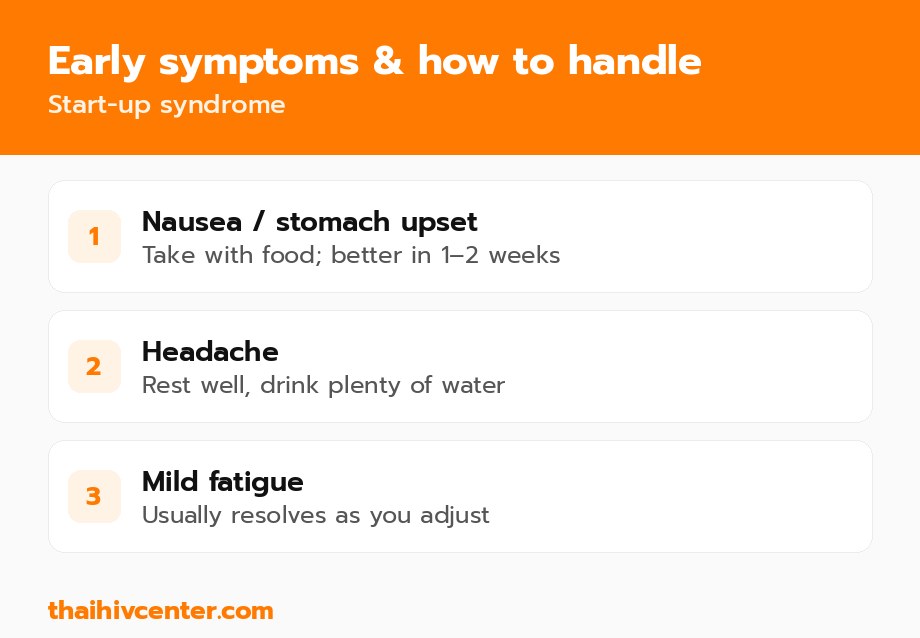
A simple tip: take the pill at the same time every day with a meal. This helps reduce nausea and makes it easier not to forget.
The long-term things your doctor monitors
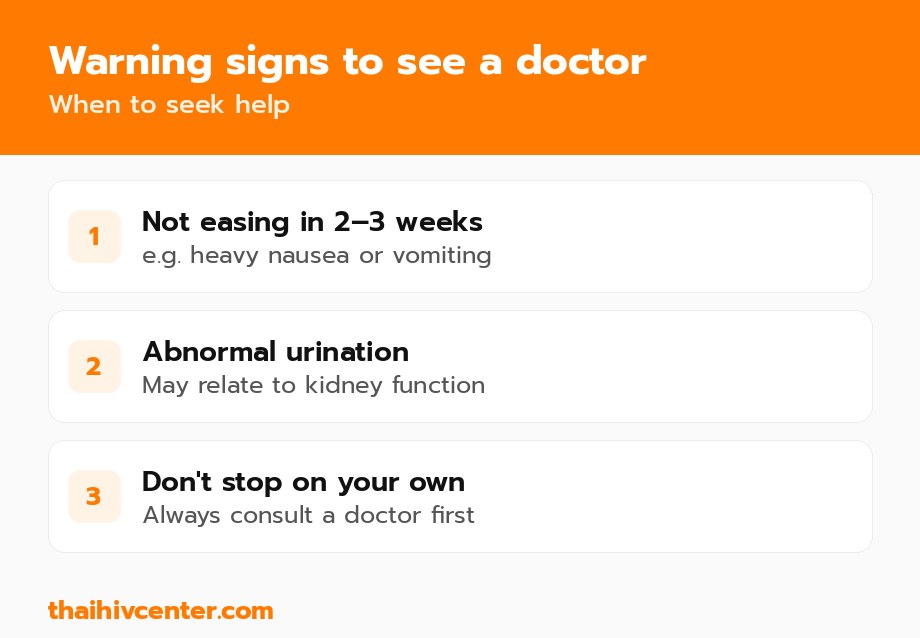
PrEP is very safe when used under a doctor's care. The kidney or bone effects many people worry about are rare and usually mild. Doctors check kidney function periodically for safety, which is why keeping your follow-up appointments matters.
Warning signs to see a doctor
If you have severe symptoms or they don't ease within 2–3 weeks, consult a doctor. Don't stop the medicine on your own without advice, as that leaves a gap in your protection.
Frequently asked questions
Will the side effects last forever?
Usually not; start-up symptoms typically fade within 1–2 weeks.
What if nausea makes it hard to take?
Try taking it with food; if it doesn't improve, ask your doctor, who may adjust the method or timing.
Does PrEP really damage bones?
Bone effects are uncommon and usually reversible after stopping. Your doctor will monitor this.
Conclusion
PrEP's early symptoms are usually mild and pass on their own. As long as you take it consistently, care for yourself, and keep your follow-up appointments, you can use PrEP safely and confidently. If you have questions or unusual symptoms, your doctor is always there to help.
For complete medical information on PrEP side effects, see PrEP Side Effects in the Prevention section
References
- World Health Organization (WHO) — PrEP safety and monitoring
- U.S. Centers for Disease Control and Prevention (CDC) — PrEP side effects
- Department of Disease Control, Thailand (DDC)
This article is for educational purposes and is not a medical diagnosis. Please consult a healthcare provider for personal advice.