Can You Get HIV From Sharing a Toilet? The Answer That Eases Every Worry
The worry that "sharing a toilet with someone who has HIV might infect me" is one of the most common misconceptions in society. Some people even avoid public toilets out of this fear. But the truth is that sharing a toilet definitely does not transmit HIV. This article explains the science in detail, reviews the everyday things HIV does not spread through, and helps you understand the facts, reducing both worry and stigma toward people living with HIV.
Why sharing a toilet cannot transmit HIV
To understand why it is safe, we first need to know the nature of HIV. The virus is more fragile than many people think and needs very specific conditions to spread.
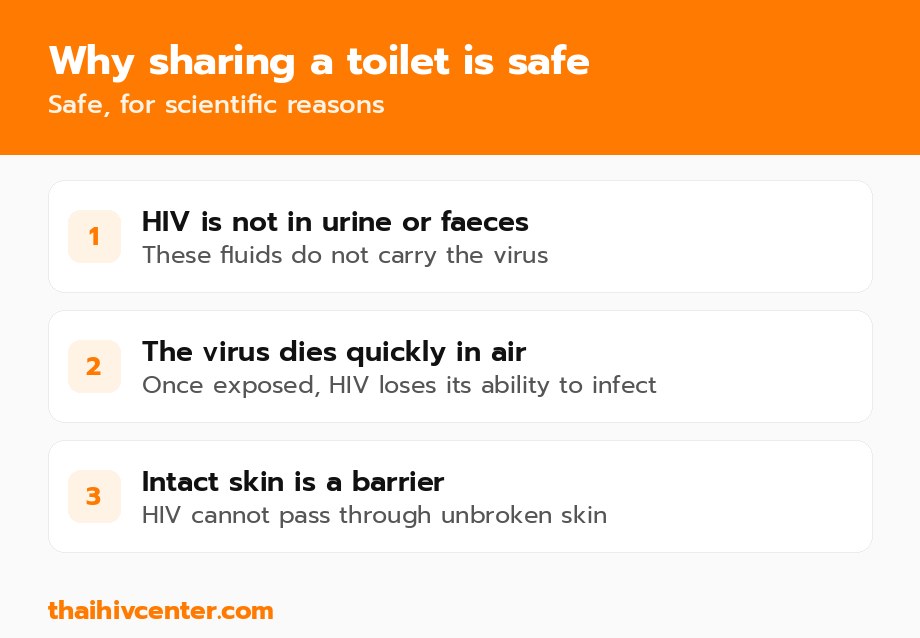
HIV is not present in urine or faeces
HIV spreads only through certain body fluids: blood, semen, vaginal and rectal fluids, and breast milk. Urine, faeces, saliva, sweat and tears do not carry the virus in transmissible amounts. So sharing a toilet or urinal cannot cause infection.
HIV dies very quickly outside the body
HIV is weak once it leaves the human body. On contact with air, room temperature, or a dry surface, it rapidly loses its ability to infect. Even if infected blood dropped onto a bathroom floor, the virus dies within a short time and cannot spread to others through touching the surface.
Intact skin is a natural barrier
Unbroken skin is an effective barrier. HIV cannot pass through normal skin into the body. Sitting on a toilet seat or touching bathroom surfaces therefore causes no infection.
Everyday things HIV does not spread through
Beyond the toilet, there are many items and places people worry about unnecessarily.
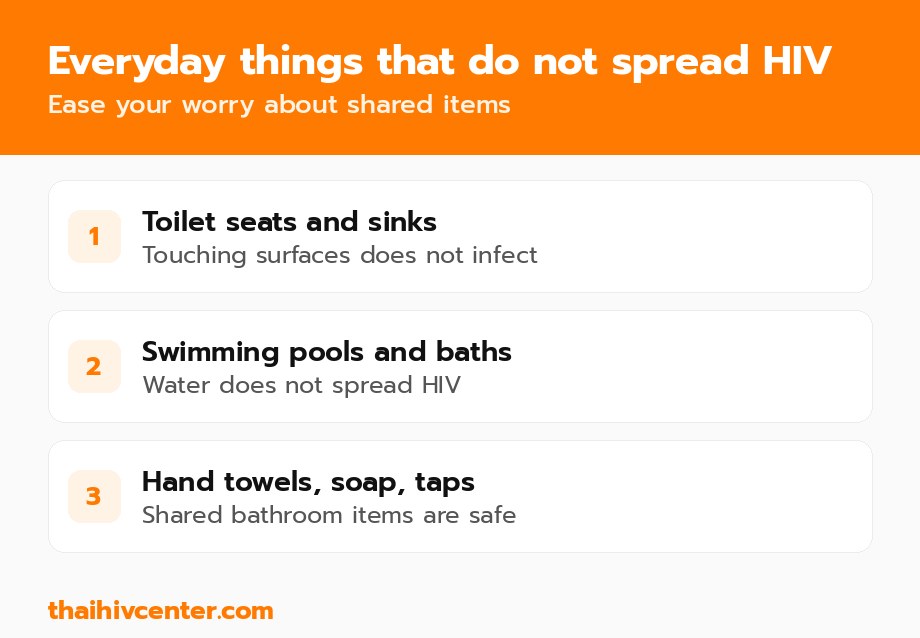
| Bathroom / public situation | Can you get HIV? |
|---|---|
| Sharing a toilet seat | No |
| Sharing sinks, taps, soap | No |
| Swimming in the same pool | No |
| Sharing hand towels | No |
| Sharing a razor with blood on it | Risk (always keep separate) |
The only thing to be cautious about is a sharp item that may carry blood, such as a razor, which is basic hygiene every family should follow anyway, not specific to HIV.
Why this myth is harmful
The belief that HIV spreads easily through toilets or ordinary contact not only creates needless fear but drives the exclusion of people living with HIV. Some are barred from shared toilets, given separate dishes, or treated as a threat, despite there being no risk at all. Sharing the facts is a key part of reducing stigma.
If you're interested in living with a person who has HIV, read Is it safe to live with someone who has HIV? and Can mosquito bites transmit HIV?
Frequently asked questions
If there's blood on the toilet and I sit down after, can I get HIV?
No. Virus in dried or air-exposed blood dies quickly, and intact skin already prevents infection.
Are public toilets a risk for HIV?
Not at all for HIV, but keep good general hygiene to prevent other germs, such as washing your hands.
Can I swim in the same pool as a person with HIV?
Yes, safely. Pool water does not spread HIV, and chlorine is not what makes it safe here.
Conclusion
Sharing toilets, seats, pools or bathroom items with a person who has HIV is completely safe, because the virus is not in urine or faeces, dies quickly outside the body, and cannot pass through intact skin. What truly matters are the main routes, condomless sex and sharing needles. If you have had a risk or feel worried, an HIV test is the best way to know your status.
References
- World Health Organization (WHO) — HIV/AIDS
- CDC — HIV Basics
- HIVinfo (NIH)
- aidsmap — HIV transmission
- HIV myths — Thai HIV Center
This article is for educational purposes and is not a medical diagnosis. If in doubt, consult a healthcare provider.